Conquering the Red Terrain: Team OBSERACT's Journey
JUMTC
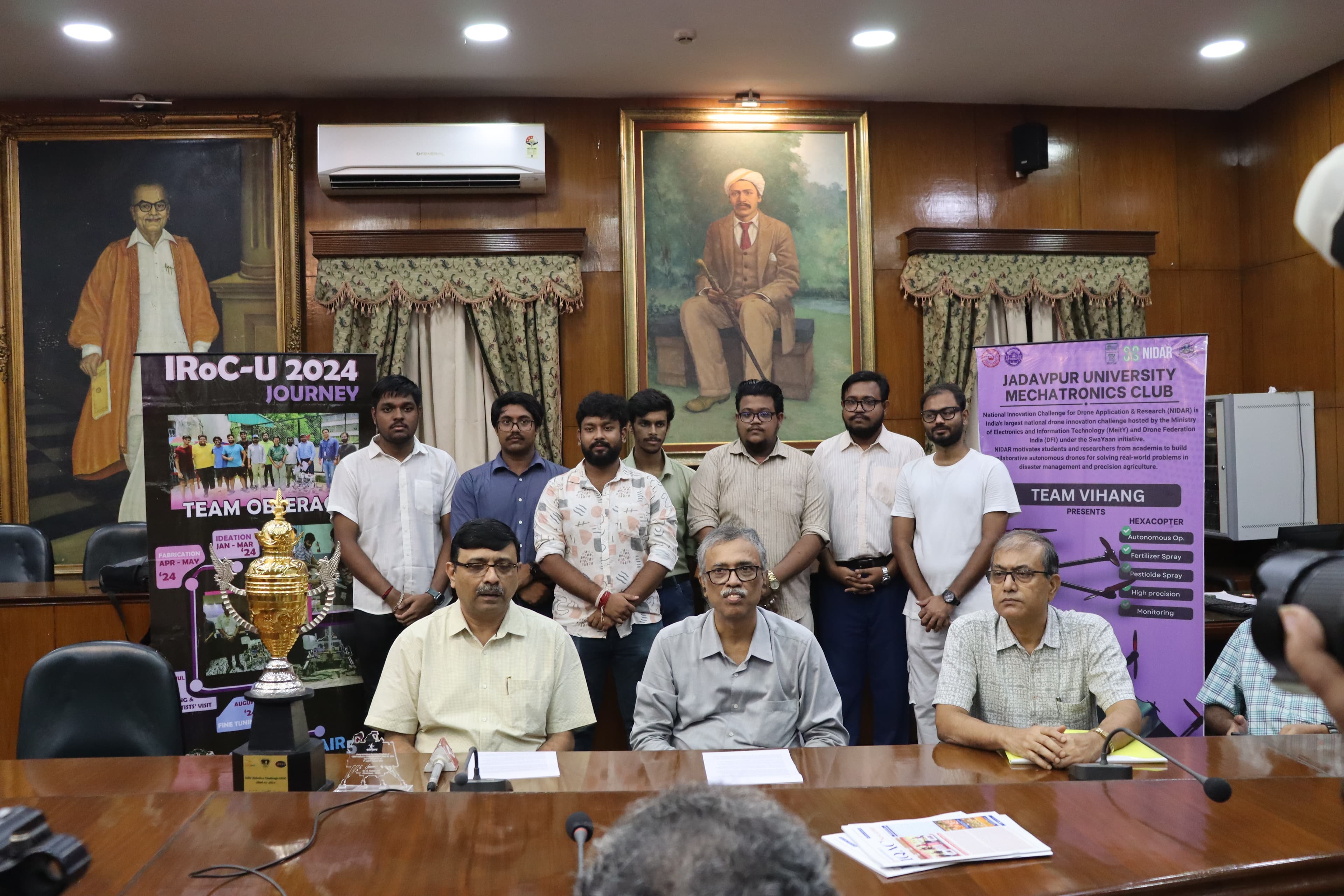
The dust has settled, but the roar of the rover's motors still echoes in our minds. The ISRO National Rover Challenge 2023 wasn't just a competition; it was a testament to grit, engineering precision, and the relentless spirit of JUMTC's Team OBSERACT. We didn't just build a robot; we engineered a survivor.
The Challenge
Organized by the Indian Space Research Organisation (ISRO), the challenge required teams to design and build a semi-autonomous rover capable of navigating a simulated Martian surface. The terrain was unforgiving—loose sand, steep craters, and scattered boulders designed to test the limits of any mechanical system.
Our mission parameters were clear but daunting: traverse the arena, identify specific markers, collect soil samples, and transmit data back to the base station—all within a strict time limit and with significant communication latency. This simulated the real-world delay faced by missions like Perseverance and Curiosity.
Engineering the Rover
Our rover, Vihanga, was built on a custom rocker-bogie suspension system, a design staple for planetary exploration. This allowed it to climb obstacles twice the diameter of its wheels without tipping over, maintaining constant wheel contact with the ground.
We utilized high-torque planetary gear motors for traction and a lightweight aluminum chassis to stay within the weight constraints. But hardware was only half the battle. The brain of the rover was a Jetson Nano, processing inputs from stereo cameras and LiDAR.
"A rover is only as good as its code. We didn't want a remote-controlled car; we wanted an explorer."
We developed a custom SLAM (Simultaneous Localization and Mapping) algorithm that allowed Vihanga to "see" the terrain in 3D and plan safe paths autonomously, avoiding hazards that a human operator might miss due to video lag.
The Competition Day
The atmosphere at the ISRO satellite center was electric. Over 300 teams had applied, but only the top 30 made it to the finals. As Vihanga rolled out onto the red soil, our hearts were in our throats.
The first obstacle was a 45-degree incline of loose gravel. While other rovers spun their wheels and dug themselves in, Vihanga's suspension articulated perfectly, gripping the rocks and pulling itself up. The autonomous navigation system kicked in for the sample retrieval task, successfully identifying the target zone and deploying the robotic arm to scoop up the regolith.
The Result
We finished the course with one of the fastest times and highest mission completion scores. Securing the 5th position nationally was a proud moment for Jadavpur University. It validated months of hard work, debugging sessions at 3 AM, and the belief that student-built hardware can perform at industry standards.