Climbing the Ranks: Team Obseract’s Journey to IRC 2026
International Rover Challenge 2026
In January 2026, the Jadavpur University Mechatronics Club participated in the International Rover Challenge (IRC) in Udupi with their modular rover, N.A.N.D.I. 2.0. Represented by Team Obseract, the project successfully integrated advanced ROS 2 navigation, a 6-DOF robotic arm, and an autonomous astrobiology module. Their technical innovation and performance on the Mars-analog terrain earned them a 20th rank internationally.
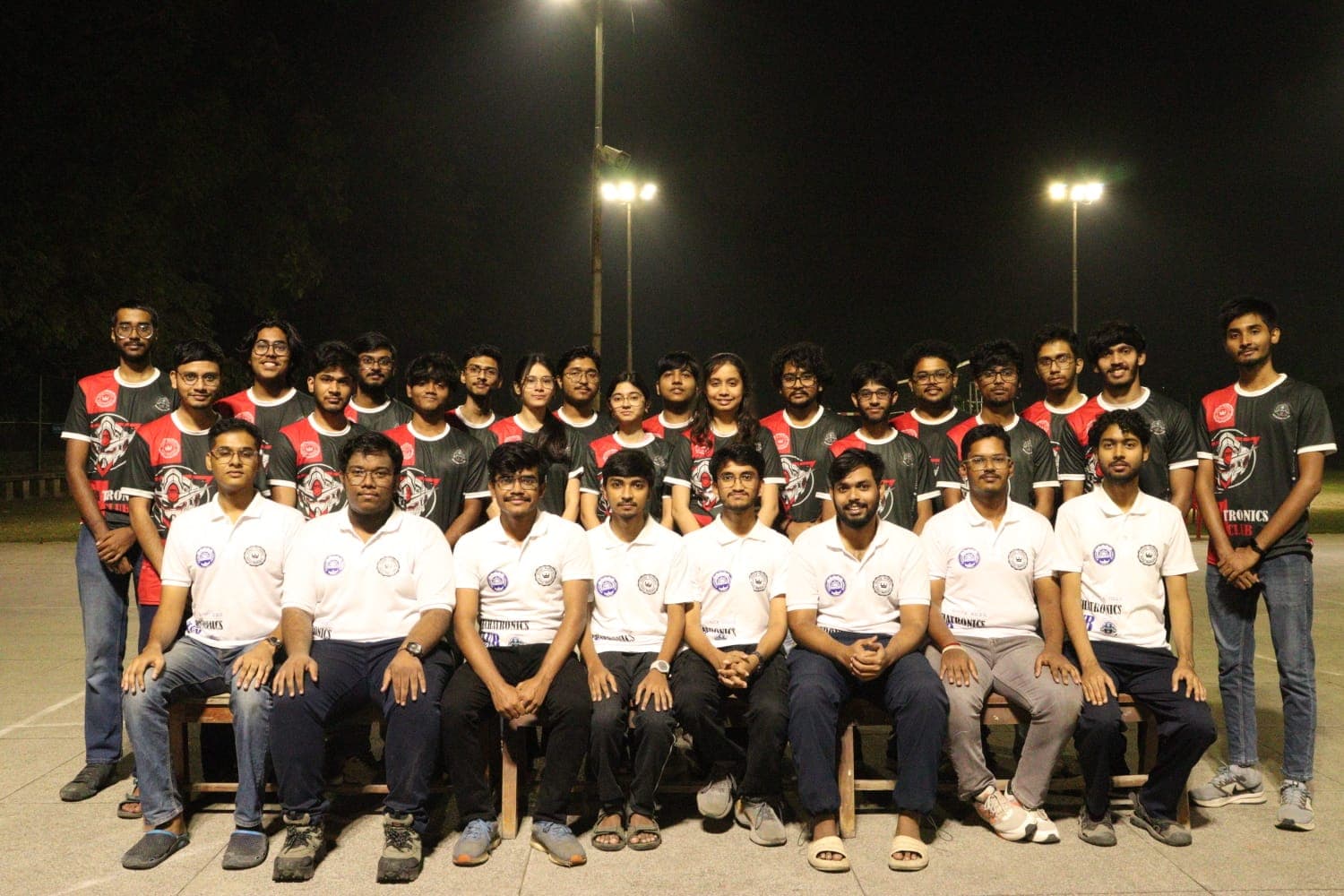
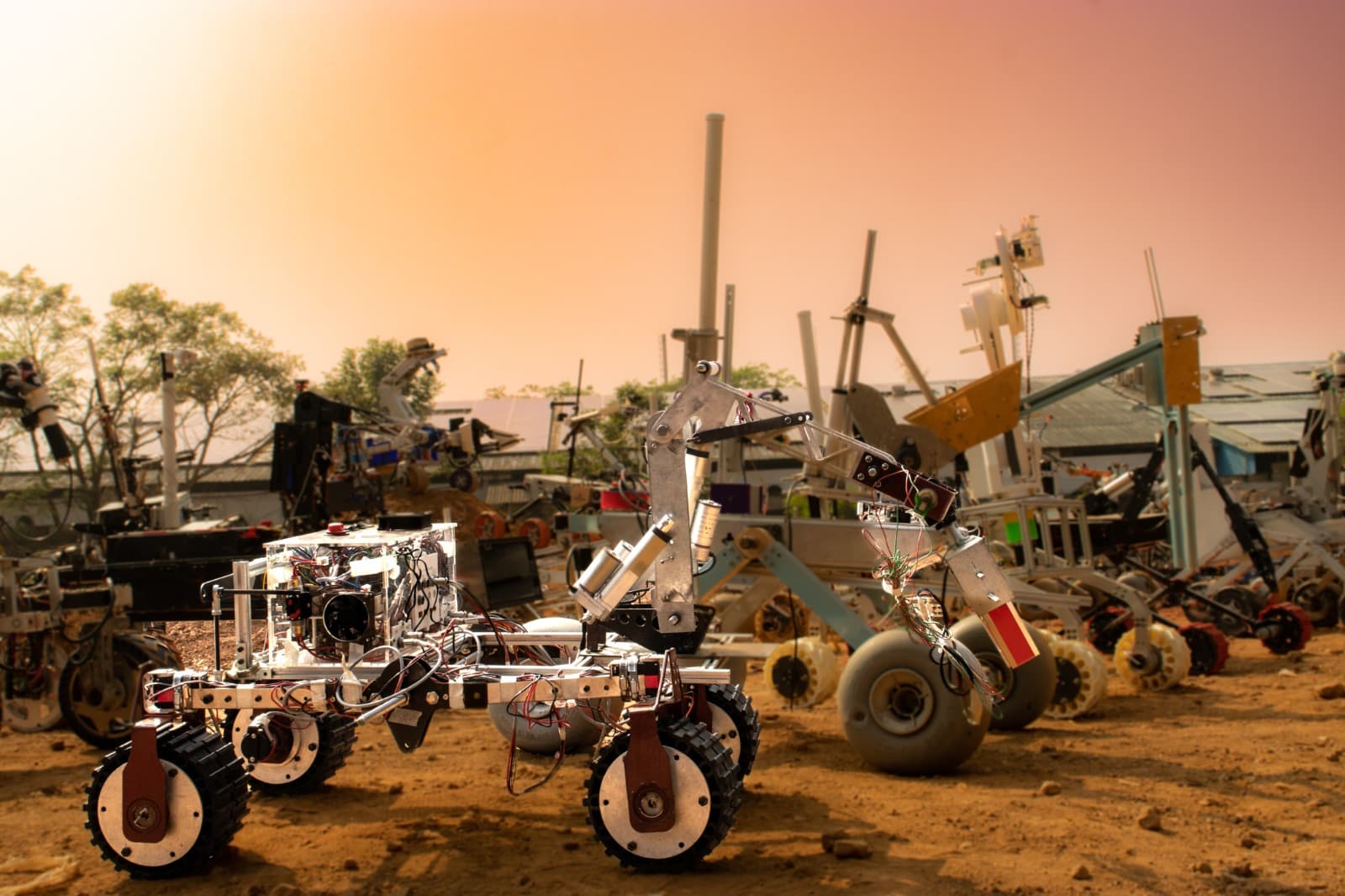
We are thrilled to announce that Team Obseract, representing the Jadavpur University Mechatronics Club, has successfully competed in the International Rover Challenge (IRC) 2026! Held in the coastal town of Udupi from January 28th to February 2nd, the competition brought together the brightest engineering minds from across the country.
Competing against a fierce field of specialized teams, our rover, N.A.N.D.I. 2.0 (Neo-Adaptive Navigational & Discovery Intelligence), powered through grueling Mars-analog terrains to secure a 20th rank nationally. This achievement is a testament to months of sleepless nights, complex simulations, and rigorous hardware testing by our dedicated team.
Meet the Machine: N.A.N.D.I. 2.0
The N.A.N.D.I. 2.0 is not just a rover; it is a modular powerhouse designed to bridge the gap between space exploration and terrestrial hazardous environment management. Our design philosophy centered on modularity and precision, allowing the rover to tackle diverse mission objectives with ease.
1. Hardware & Roving Mechanism
Built on a robust chassis, the rover utilizes a sophisticated differential steering system. This allows for Mode 1 (Standing Rotation)—enabling on-spot turns with zero radius—and Mode 2 (Differential Steering) for smooth cornering in open terrain.
-
Modular Wheels: Custom-designed using a "sandwich-style" architecture. The outer tires are 3D-printed with flexible TPU (Thermoplastic Polyurethane) for maximum traction, while the hubs are CNC-machined from Aluminum 6061 for lightweight strength.
-
The Robotic Arm: A 6-DOF (Degrees of Freedom) serial manipulator capable of lifting up to 8 kg and reaching heights of 1 meter. It features a differential bevel gear system for the wrist and linear actuators for the shoulder and elbow to ensure high-torque, stable movements.
2. Software & Intelligence
The "brain" of N.A.N.D.I. 2.0 is a hierarchical system that splits tasks between high-level processing and real-time actuation:
-
High-Level Control: An NVIDIA Jetson Orin Nano handles the heavy lifting, including ROS 2 integration, SLAM (Simultaneous Localization and Mapping), and a custom YOLOv11 vision stack for object detection.
-
Low-Level Control: An Arduino Mega 2560 manages the PWM generation, PID control for the motors, and the crucial safety subsystems that monitor current to prevent damage.
-
Autonomous Navigation: By fusing data from LIDAR, an Intel RealSense D435 depth camera, and a BNO055 IMU, the rover can map its environment in 3D and steer toward targets autonomously.
3. The Science Module: Searching for Life
Our Astrobiology Box is the crown jewel of our scientific mission. Instead of bulky lab equipment, we developed a minimalistic approach using a modified TCS3200 color sensor that functions as both a fluorometer and colorimeter. This allowed us to perform critical soil tests, including:
-
Labile Carbon Test (POXC): To detect biological activity through organic matter oxidation.
-
Biuret Test: To confirm the presence of proteins.
-
Ethidium Bromide Test: To identify nucleic acids (DNA/RNA) using bright fluorescence.
The Mission Breakdown
Our team was structured into specialized divisions: Hardware, Electronics, Software, Science, Public Relations, and Management. This collaborative effort allowed us to manage a modular budget of approximately ₹6,15,000, supported by Jadavpur University, our esteemed alumni, and sponsors like Solidworks and Ansys.
#TeamObseract #JadavpurUniversity #IRC2026 #Robotics #SpaceExploration #Mechatronics