HydroDrift: An Autonomous Water-Cleaning Robot
Robofest 5.0
Developed for Robofest Gujarat 5.0, Team HydroDrift presents a self-navigating aquatic robot that combines waste collection with real-time water quality monitoring. Equipped with a smart conveyor system, onboard “Science Box,” and AI-powered vision, HydroDrift not only cleans polluted water bodies but also generates actionable environmental data for sustainable management.
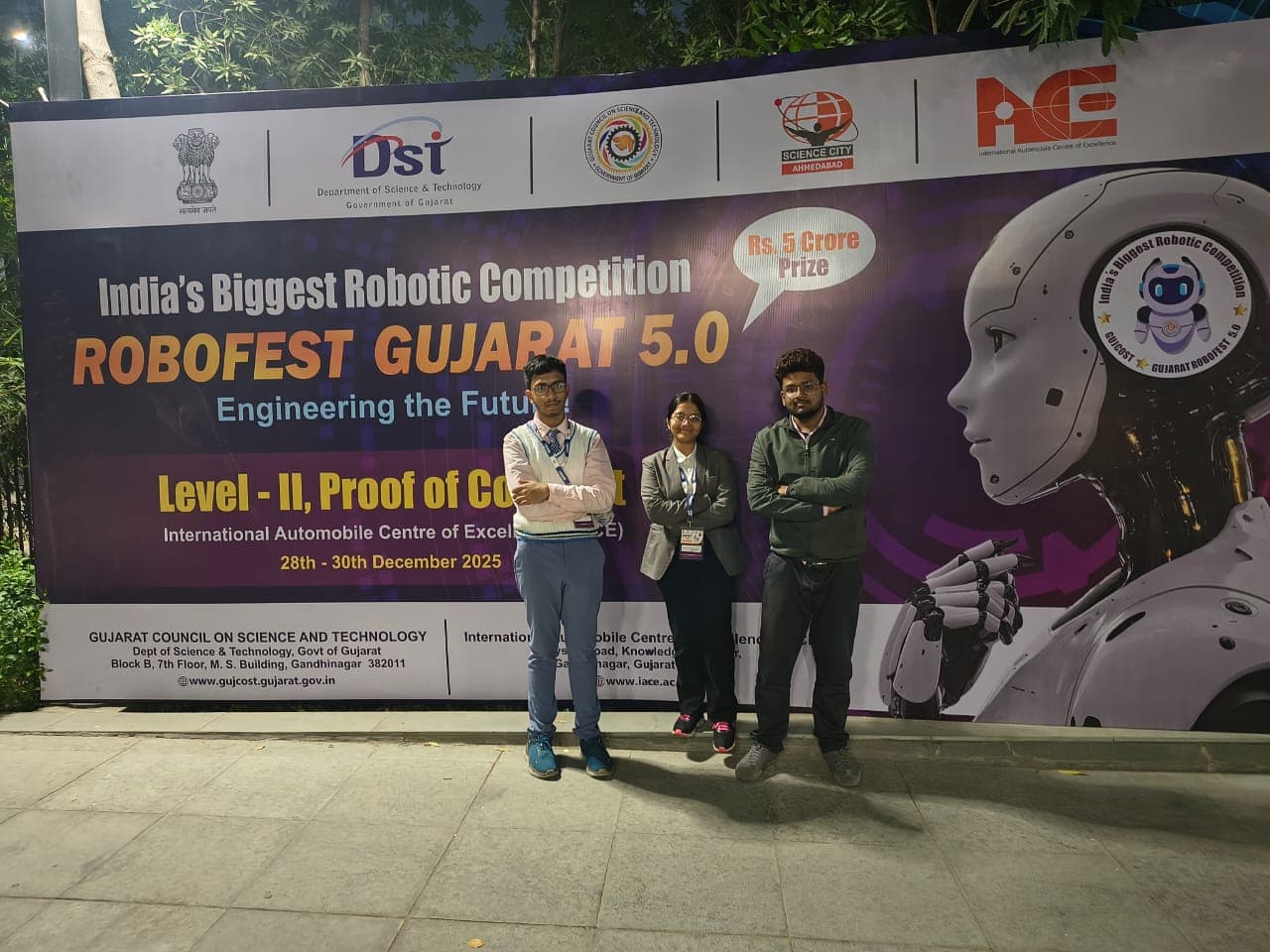
For Robofest Gujarat 5.0, Team HydroDrift developed an autonomous solution to one of our planet’s most pressing challenges: water pollution.
Our project isn't just a boat; it's a mobile laboratory designed to clean our waterways and monitor their health in real-time.
The Ocean's Vacuum: Cleaning with Precision
The heart of the HydroDrift is its ability to actively remove physical waste from the water's surface.
-
The Hull: We designed a high-stability hull to navigate varied water conditions while carrying a heavy payload of collected debris.
-
The Conveyor System: Using a custom-built conveyor belt, the robot "swallows" floating plastic and waste, depositing it into an internal storage bay for later disposal.
-
Smart Propulsion: High-torque DC motors with encoders allow the robot to maneuver precisely, ensuring it doesn't miss a single piece of trash.
A Laboratory on the Waves: The Science Box
Cleaning is only half the battle; understanding the water's health is the other. We integrated a "Science Box" that acts as an onboard diagnostic suite.
-
Real-Time Testing: As the robot moves, it constantly tests for Total Dissolved Solids (TDS), pH levels, and Dissolved Oxygen.
-
Autonomous Monitoring: This data is logged and transmitted back to us, creating a digital map of water quality across an entire lake or pond.
-
The Powerhouse: To keep these systems running, we implemented a robust power distribution system centered around high-capacity batteries and efficient motor drivers.
Intelligence Beneath the Surface
The HydroDrift doesn't need a pilot; it has its own vision and decision-making logic.
-
Computer Vision: Using advanced object detection models, the robot can distinguish between floating waste and natural obstacles like lily pads or ducks.
-
Inference Pipeline: A dedicated software subsystem processes these images in real-time, allowing the robot to adjust its path instantly to chase down debris.
-
Navigation: By fusing data from IMUs and optical sensors, the robot maintains its orientation and completes its cleaning route with military precision.